
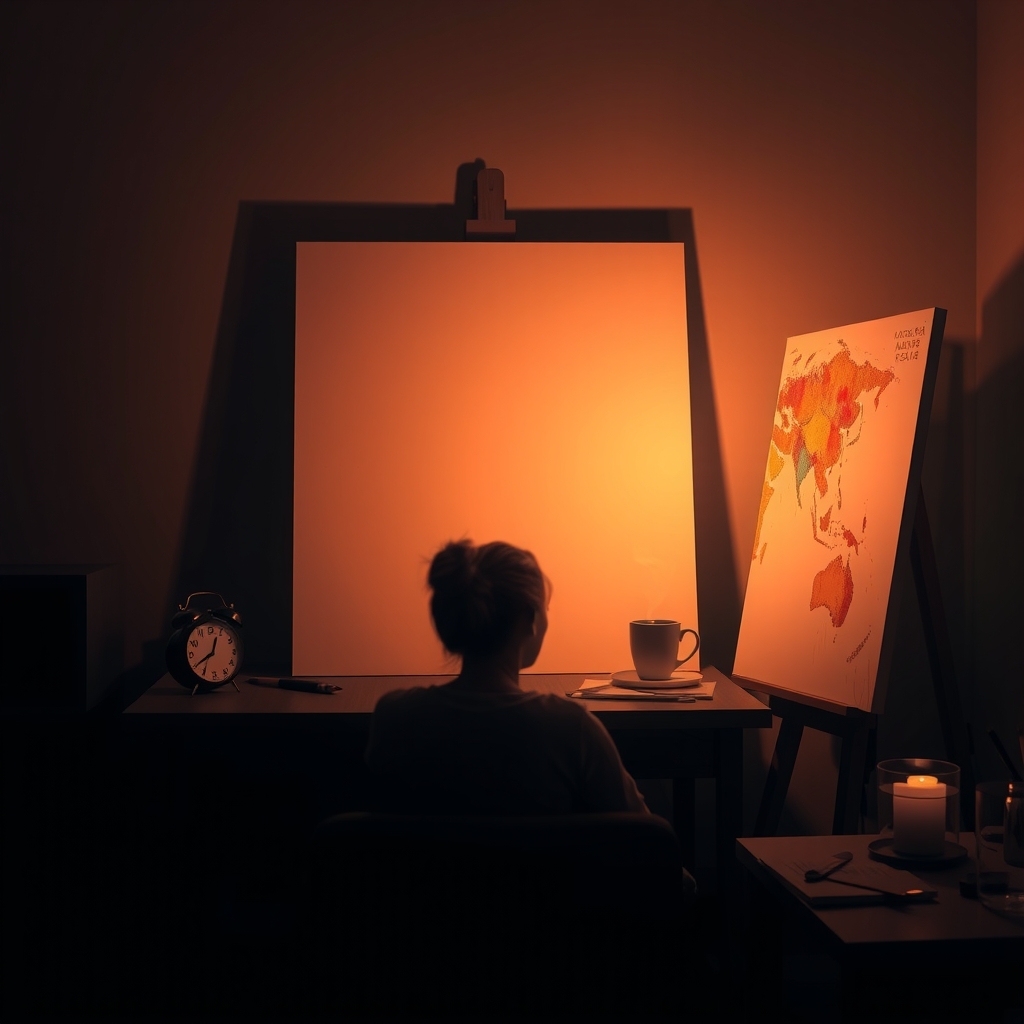
Every sunrise brings a familiar rhythm: the alarm that jolts us awake, the coffee that fuels the first sip, the commute that carries us toward a day shaped by routines we barely question. Yet beneath that ordinary surface lies a hidden current, a tide of unspoken words, lingering regrets, and suppressed desires that gather in the quiet corners of our minds. We convince ourselves that keeping these feelings hidden protects us from pain, but the truth is that silence is a slow‑building weight, a collection of invisible stones that settle heavier with each passing year. When we refuse to name what haunts us, the burden becomes invisible, yet it remains no less real, sitting in the empty spaces between our thoughts and waiting for a moment of vulnerability to surface. The weight is not just emotional; it seeps into our sleep, our appetite, and even our immune system, turning everyday stress into a chronic companion that whispers, “you are not enough.” We wear masks of productivity, pretending that busyness is a shield, while the inner void grows louder with each unvoiced apology. The silence we cultivate becomes a prison, and the key is often hidden in the very act of speaking. If we dare to let the first word escape, the cascade of honesty may begin to dissolve the walls we have built. When we finally let the truth out, the weight that once pressed on our chest becomes a distant echo, reminding us that we are still capable of moving forward.
Have you ever felt the ache of a story you never told, a truth that lingered like smoke in a closed room? As the poet Rumi whispered, “The wound is the place where the Light enters you,” reminding us that confronting the silent weight can become the doorway to healing. The question is not whether we can stay silent, but whether we are willing to let the silence break, to let the truth echo back to us. Each unspoken regret is a stone we carry, and each stone we finally set down lightens the load we have been shouldering for years. Imagine the relief of placing that stone on a table, watching it roll away, and feeling the space it once occupied expand into possibility. When we allow ourselves to speak, the echo reverberates through the chambers of our mind, reshaping the narrative we have lived by for decades. The act of naming our pain transforms it from a hidden parasite into a catalyst for growth, turning what once felt like a curse into a compass pointing toward a more authentic self. Each spoken word is a step out of the darkness, a declaration that the silence we have kept was never a shield but a cage.
Consider Maya, a thirty‑four‑year‑old graphic designer who spent a decade perfecting her craft while burying the memory of a childhood promise to become a painter. She told herself that art was a luxury she could not afford, that the steady paycheck was the only safe harbor, and that dreaming of colors was an indulgence reserved for others. One rainy evening, after a client deadline forced her to work past midnight, she stared at a blank canvas and felt a sudden, visceral pang—a reminder that a part of her had been left dormant. In that instant, the weight of unspoken ambition manifested as a tightness in her chest, a physical manifestation of a life half‑lived, and the question rose unbidden: Who am I when I am not defined by deadlines? She wondered if the years spent polishing logos and layouts had cost her the chance to splash pigment across a canvas, to hear the whisper of brush on paper, to feel the freedom that only creation can grant. The ache she felt was not merely fatigue; it was the echo of a dream that had been shelved, waiting for a moment of courage to resurface.
What if the moment of realization is the first crack in the dam of denial? Maya’s breath caught, and with it came a flood of questions: Who am I when I am not defined by deadlines? What would my life look like if I allowed the colors I once loved to return? The answer was not a sudden transformation, but a series of tiny admissions—writing a single line in a journal, buying a cheap set of watercolors, allowing herself five minutes of unstructured creation each day. Each admission was a rebellion against the narrative that told her to stay small, and each rebellion chipped away at the invisible chains that had bound her for so long. As she painted, the colors she once suppressed resurfaced, and with each brushstroke she reclaimed a piece of herself that had been stored in the attic of unspoken regret. The act of creating became a dialogue between past and present, a reminder that the heart still remembers the rhythm of color, even when the mind has tried to silence it.
The ripple of unspoken regret does not stay confined to the individual; it spreads like a stone dropped into a still pond, creating concentric circles that touch every facet of life. Maya’s hesitation to paint affected her relationships, for friends who once saw her vibrant imagination now sensed a quiet distance, wondering if she had withdrawn out of indifference. At work, the same suppression manifested as a reluctance to propose bold ideas, causing her contributions to be overlooked and her career trajectory to plateau. Even her health felt the strain, as chronic stress manifested in sleepless nights and a lingering fatigue that no amount of coffee could dispel. The invisible weight began to seep into her mornings, making the simple act of getting out of bed feel like climbing a hill. She noticed that the silence also colored her conversations, turning casual chats into rehearsed monologues where she avoided topics that might stir the dormant passion. Colleagues began to label her as “reserved” or “unapproachable,” not realizing that the true source of her distance was an unvoiced yearning for artistic expression.
Have you ever noticed how a single unvoiced grievance can erode trust between partners, create distance in friendships, and foster a culture of silent resentment at the office? The philosopher Søren Kierkegaard observed, “Life can only be understood backwards; but it must be lived forwards,” suggesting that acknowledging the past is essential to moving forward. When we refuse to articulate our regrets, we deny ourselves the chance to rewrite the narrative, and the unspoken becomes a silent antagonist that sabotages intimacy, collaboration, and even our own sense of self‑worth. Each unspoken word is a seed that, if left unchecked, grows into a thicket of doubt that chokes the possibilities of tomorrow.
Breaking the silence begins with a deliberate act of honesty, however small it may seem. Maya decided to write a single sentence each night: “I miss the feeling of brushstrokes on canvas.” That sentence was a foothold, a declaration that the past still mattered and that she was willing to acknowledge it. She then shared that sentence with a close friend, who responded with a simple, “I’ve felt that too.” The shared vulnerability turned isolation into connection, and the act of speaking the unspoken began to dissolve the invisible wall that had kept her trapped. The first step was not a grand proclamation but a quiet admission that the heart still yearned for the colors it once loved. She set a modest goal: to attend a local art class once a week, to keep a sketchbook in her bag, and to allow herself moments of creative play without judgment. Each step, though modest, was a conscious choice to replace silence with sound, to replace fear with curiosity. As she painted, the colors she once suppressed resurfaced, and with each brushstroke she reclaimed a piece of herself that had been stored in the attic of unspoken regret.
The process is not about erasing the past, but about integrating it into a new story that honors both loss and possibility. Maya set a modest goal: to attend a local art class once a week, to keep a sketchbook in her bag, and to allow herself moments of creative play without judgment. Each step, though modest, was a conscious choice to replace silence with sound, to replace fear with curiosity. As she painted, the colors she once suppressed resurfaced, and with each brushstroke she reclaimed a piece of herself that had been stored in the attic of unspoken regret. The journey forward is not about erasing the past, but about walking forward with the knowledge that every unspoken word once spoken becomes a quiet anthem of freedom.
When the walls of silence finally crumble, a profound sense of liberation emerges, not as a sudden burst but as a gradual unfurling of confidence. Maya walked into the studio with a sketchbook under her arm, greeted the instructor with a genuine smile, and for the first time in years allowed herself to be seen as both designer and artist. The applause of her own curiosity became louder than any external validation, and the weight that once pressed on her chest lightened into a steady rhythm of purpose. She discovered that the act of creating was no longer a secret hobby but a declaration of identity, a reminder that she could be both professional and passionate without compromise.
Ask yourself: what would you become if you let the unspoken chapters of your life be read aloud, not as burdens but as stepping stones? The poet Maya Angelou reminded us, “We may encounter many defeats but we must not be defeated.” Embracing the truth of our past does not mean dwelling in regret; it means using those memories as fuel for forward motion, turning each scar into a badge of resilience. The journey forward is not about erasing the past, but about walking forward with the knowledge that every unspoken word once spoken becomes a quiet anthem of freedom, echoing through the corridors of our lives and inviting us to step boldly into the next chapter.

—— END ——