
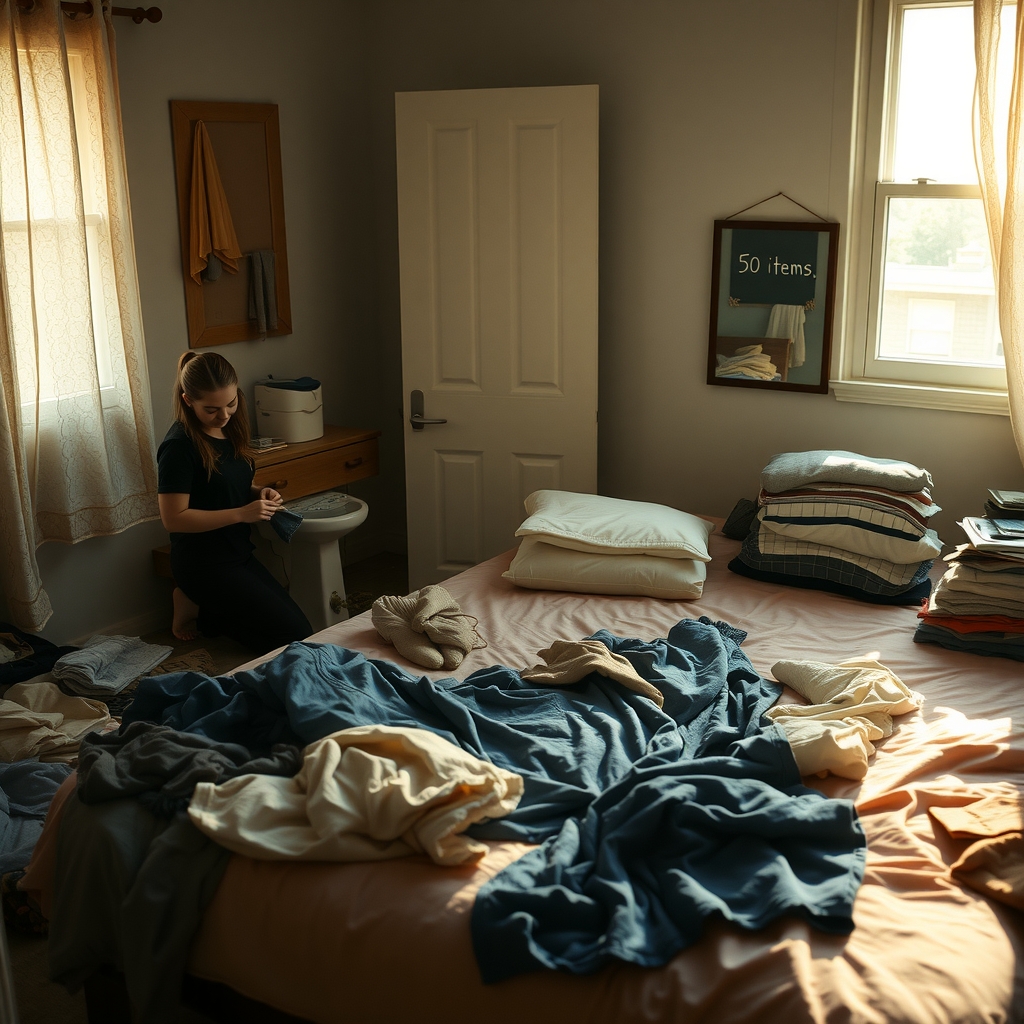
The first time I stared at the mountain of clothes spilling out of my closet, I felt a quiet shame that had been building for years. Each shirt, each pair of shoes, each forgotten gadget whispered a story I wasn’t ready to hear—a story of accumulation, of “just in case,” of the belief that more things meant more security. I had read countless minimalist manifestos, scrolled through Instagram feeds of pristine white spaces, and yet my own apartment remained a chaotic archive of impulse buys and sentimental hoardings. It was on a rainy Tuesday, when I could barely find a clean mug for my morning coffee, that I whispered to myself: what if I could strip away fifty items in just one week? The idea felt both absurd and oddly liberating, a dare to confront the clutter not as a chore but as a conversation with my past self.
I announced the challenge to a few close friends, half expecting ridicule, half hoping for accountability. Their reactions ranged from amused skepticism to genuine curiosity, and that mix of responses gave me the strange comfort of knowing I wasn’t entirely alone in this experiment. I set a simple rule: each day I would select items to discard, donate, or recycle, aiming for a total of fifty by the end of the seventh day. I didn’t impose strict categories; instead, I let intuition guide me, promising myself that if an object didn’t spark a clear sense of purpose or joy, it would leave my space. Writing the intention down on a sticky note and placing it on my bathroom mirror turned the abstract goal into a tangible promise, a daily reminder that I was choosing to reclaim not just square footage but mental bandwidth.
The first morning was a blur of hesitation and adrenaline. I pulled out every piece of clothing, laid them on the bed, and began to touch each fabric, feeling the weight of memories stitched into seams. A faded band t‑shirt from a college concert made my throat tighten; it reminded me of nights spent laughing with friends who are now scattered across the country. I felt the pull of nostalgia, the whisper that letting go would mean erasing a piece of my identity. Yet, as I held each item, I asked myself a simple, ruthless question: does this serve the person I am today, or merely the person I was yesterday? The answer often arrived before I could overthink it, and I began to create three piles—keep, let go, and maybe—though the maybe pile quickly shrank as I realized indecisiveness was just another form of clinging.
By day three, the process had shifted from a physical sorting task to an emotional excavation. I discovered that many of the objects I clung to were proxies for feelings I hadn’t allowed myself to feel: an old journal represented the fear of confronting unfinished dreams, a set of mismatched mugs hinted at a desire for spontaneity I’d suppressed in favor of routine. When I reached for a chipped ceramic bowl my grandmother had given me, I felt a surge of guilt at the thought of parting with it. I sat on the floor, cradling the bowl, and let the memories wash over me—her voice, the scent of her kitchen, the quiet pride she felt when I learned to cook. In that moment, I realized that keeping the bowl out of obligation wasn’t honoring her; it was imprisoning a memory in a state of perpetual guilt. I decided to photograph the bowl, store the image in a digital album, and give the physical piece to a friend who would actually use it. The act felt less like loss and more like transmission.
The physical transformation was almost immediate. By the fourth day, my closet doors closed without a struggle, and the surface of my desk was visible for the first time in months. The sheer volume of empty space seemed to breathe, inviting light to linger longer in the corners. I noticed that getting dressed in the morning took less than half the time; there was no longer a mental parade of options to veto, no nagging doubt about whether I’d chosen the “right” outfit. The reduction in decision fatigue spilled over into other areas: I found myself preparing breakfast with a sense of calm, scrolling through my phone less, and even pausing to stare out the window without the urge to fill the silence with noise. Small victories began to accumulate—a missing earring resurfaced in a drawer I’d cleared, a favorite book reappeared on a shelf I’d dusted, and each rediscovery felt like a quiet gift from my past self, unburdened by the weight of excess.
Beyond the tangible, the challenge began to reshape my relationships. With fewer distractions occupying my physical environment, I found myself more present during conversations. When my partner spoke about his day, I no longer glanced at the pile of mail threatening to topple over; I listened, really listened, and responded with thoughtful questions rather than polite nods. Friends who visited remarked on the calmness of the space, and I realized that the environment had become a silent collaborator in fostering deeper connection. The reclaimed minutes—those previously lost to searching for a charger, untangling headphones, or shifting piles to make room for a seat—were now invested in activities that truly nourished me: reading a chapter of a novel before bed, taking a walk without a destination, or simply sitting with a cup of tea and letting my thoughts wander without the undercurrent of anxiety about what I might be missing.
Perhaps the most surprising revelation was how the act of discarding unearthed emotions I had long avoided. Each item I let go of carried a subtle emotional charge—a reminder of a failed project, a symbol of a version of myself I thought I should have become, a token of a relationship that had faded. Confronting these charges was uncomfortable, yet it also offered a strange kind of freedom. I began to journal briefly after each sorting session, noting the feelings that surfaced and questioning why I had attached certain meanings to specific objects. Over time, the pattern became clear: I was using material possessions as buffers against vulnerability, as tangible proof that I existed, that I mattered, that I had lived. By relinquishing them, I wasn’t erasing my history; I was learning to hold my experiences internally, allowing them to shape me without needing external props.
One week later, the fifty‑item goal had been met, but the transformation felt far from complete. I now own thirty‑seven items fewer than I did at the start, and the space they vacated remains intentionally empty, a reminder that emptiness is not a void but a canvas. The habit of questioning each new purchase before it enters my home has taken root; I pause, ask whether it aligns with my current values, and often walk away. Minimalism, I’ve discovered, isn’t a destination but a lens—a continuous practice of discernment that keeps the noise at bay and allows the signal of what truly matters to come through. If you’ve ever felt the weight of belongings pressing down on your chest, consider this: what would happen if you chose fifty items to release, not as a punishment, but as an invitation to listen more closely to yourself? The answer might just be waiting in the space you create.
—— END ——