

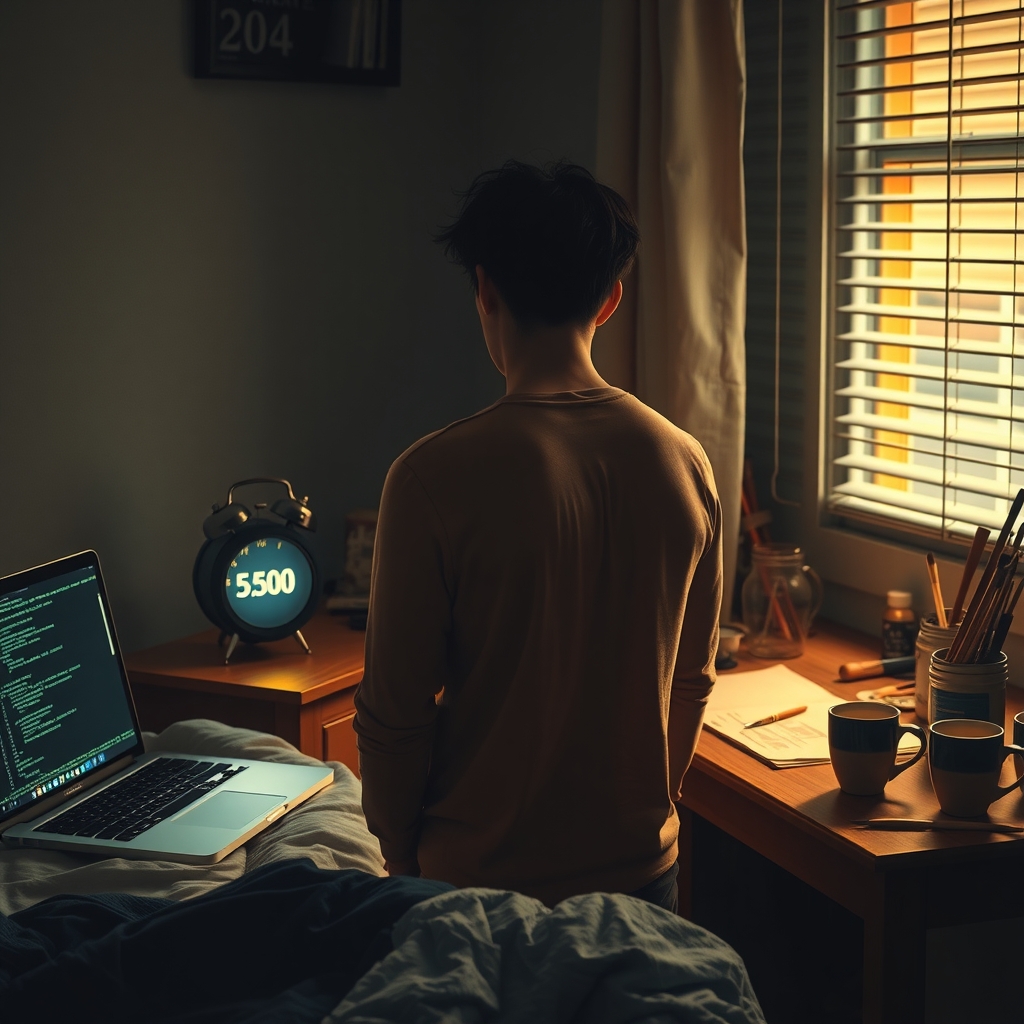
The alarm blares at 5 a.m., and before the first sip of coffee you already feel the weight of two worlds pressing against your chest. On one side lies the steady paycheck, the predictable meetings, the faint hum of office politics that keeps the lights on. On the other side flickers the restless spark of a side hustle—a passion project, a freelance gig, a dream that whispers, “What if I could make this my main thing?” You tell yourself you’re just “testing the waters,” yet the water feels icy, and each lap leaves you gasping for breath. Guilt creeps in when you skip a family dinner to meet a client deadline, and anxiety spikes when a spreadsheet error at your day job threatens the bonus you’ve been counting on. This tension isn’t merely a scheduling problem; it’s an identity crisis wrapped in exhaustion, a silent bargain you make with yourself every morning: sacrifice sleep now for the promise of freedom later.
Consider Maya, a senior software engineer at a midsize tech firm who began selling hand‑glazed ceramics on weekends after a stressful quarter left her feeling hollow. At first she painted mugs during lunch breaks, convinced the extra $200 a month would cushion her student loans. Six months later, her Etsy shop was pulling in $1,500, but her performance reviews showed a dip in code quality, and her manager noted she seemed “distracted.” Maya’s story isn’t unique; a 2023 Gallup study found that 42 % of full‑time workers with side hustles report chronic fatigue, while 31 % admit their primary job performance suffers. The numbers paint a stark picture: the hustle culture that glorifies “grind” often hides a costly trade‑off between stability and self‑actualization, leaving many caught in a loop of doing more but feeling less.
What if the solution isn’t to hustle harder but to architect your time with the precision of a master craftsman? Traditional to‑do lists treat every task as equal, inflating the importance of answering emails while starving the deep work that fuels both your job and your passion. Time blocking—dividing your day into dedicated slots for specific activities—creates containers where focus can thrive without constant context‑switching. Research from the University of California shows that workers who block their schedules report a 23 % increase in perceived productivity and a 19 % drop in stress markers. Start by anchoring your non‑negotiables: sleep, core job hours, and a fixed “hustle window” that respects your ultradian rhythm—the natural 90‑minute cycles of alertness and fatigue that govern human performance.
Picture Luis, a registered nurse who moonlights as a freelance graphic designer. He discovered that his energy peaks between 10 a.m. and 11:30 a.m., then again from 3 p.m. to 4:30 p.m. By scheduling his most demanding design tasks inside those windows and reserving his nursing shifts for the lower‑energy periods, he turned what felt like a chaotic scramble into a predictable rhythm. He also inserted ten‑minute “buffer zones” between blocks to handle inevitable overflow—traffic, a sudden patient call, or a client revision—without derailing the entire day. The key isn’t rigid adherence but having a visual map that tells your brain, “Now is the time for X,” reducing the mental load of constant decision‑making and protecting the precious few hours where true mastery can happen.
To make time blocking stick, pair it with simple rituals: a color‑coded calendar where your job is navy, your side hustle is emerald, and personal recovery is soft gold; a weekly review on Sunday evening where you glance at the past week’s blocks, note where they bled, and adjust the upcoming week; and a shutdown ritual at the end of each workday—closing your laptop, writing a one‑sentence win, and physically stepping away from your workspace. These small ceremonies signal to your nervous system that it’s safe to transition, preventing the blur that fuels burnout. When your calendar becomes a sanctuary rather than a jailer, you regain the agency to pursue both livelihood and legacy without sacrificing your sanity.
Even the most flawless schedule crumbles if your body runs on empty. Sleep isn’t a luxury; it’s the foundation of cognitive clarity, emotional regulation, and immune resilience. Neuroscientists at Harvard Medical School have shown that consistently logging fewer than six hours of sleep impairs prefrontal cortex function to the same degree as a blood alcohol level of 0.10 %—you’re effectively working drunk. Yet many side‑hustlers boast about “pulling all‑nighters” as a badge of honor, unaware that each lost hour chips away at reaction time, creative insight, and the ability to regulate stress hormones like cortisol.
Take Priya, a high‑school teacher who tutors math online after school. She committed to a strict lights‑out at 10:30 p.m., installed blackout curtains, and replaced late‑night scrolling with a ten‑minute progressive muscle relaxation routine. Within three weeks, her students noted she seemed more present during lessons, and her tutoring clients praised her sharper explanations. Priya’s experience mirrors the data: a 2022 meta‑analysis of 68 studies found that extending sleep by just one hour per night improved task performance by an average of 12 % and reduced perceived effort by 15 %.
Nutrition and movement act as the fine‑tuning knobs on this engine. Skipping breakfast or relying on sugary snacks creates glucose rollercoasters that sabotage focus, while brief movement breaks—two minutes of stretching, a quick walk around the block, or a set of jumping jacks—re‑oxygenate the brain and reset attention spans. Carlos, a freelance video editor who also works a full‑time IT support job, keeps a reusable water bottle at his desk, snacks on almonds and Greek yogurt, and does a five‑minute desk yoga flow every ninety minutes. He reports fewer headaches, steadier energy, and a noticeable uptick in his editing creativity.
Finally, mental recovery is the invisible glue that holds everything together. Practices like mindfulness meditation, nature exposure, or a deliberate “digital sunset”—turning off screens an hour before bed—lower amygdala activity, the brain’s fear center, and boost parasympathetic tone. Jasmine, a marketing manager who runs a niche blog about sustainable fashion, swears by a twenty‑minute forest bath after her workday. She describes the sensation as “pressing a reset button on my mind,” allowing her to return to her blog with fresh ideas rather than recycled fatigue. When you honor sleep, fuel your body, and give your mind genuine downtime, you transform exhaustion into endurance, making the dual life not just survivable but sustainable.
The invisible walls that blur your job and side hustle are often self‑erected, built from the belief that being constantly available equals being valuable. Yet every time you say “yes” to an extra meeting, a last‑minute client request, or a social media notification, you chip away at the protective boundary that guards your focus and energy. Setting clear limits isn’t selfish; it’s an act of stewardship over the finite resources that allow you to excel in both arenas.
Start by defining your “work windows”—the specific hours you devote to your primary employment and the distinct blocks reserved for your side hustle. Communicate these windows explicitly to your manager, teammates, and clients. A simple script works wonders: “I’m fully committed to delivering high‑quality work on my primary responsibilities between 9 a.m. and 5 p.m., and I allocate evenings from 7 p.m. to 9 p.m. for client projects. Outside those windows I’ll respond to non‑urgent messages the next morning.” When you frame boundaries as a commitment to quality rather than a refusal to help, you invite respect instead of resentment.
Consider Diego, a corporate lawyer who hosts a true‑crime podcast on weekends. He negotiated with his firm to keep his case load predictable, allowing him to block Saturday mornings for recording and editing. When a partner asked him to stay late for a surprise deposition, Diego politely declined, citing his pre‑recorded podcast episode that required his attention. The partner appreciated his honesty, and Diego’s podcast continued to grow without jeopardizing his billable hours.
Physical and digital separation reinforce these temporal boundaries. If possible, designate a separate desk, room, or even a different laptop for your side hustle; the mere act of switching environments cues your brain to shift modes. Turn off non‑essential notifications during your job hours, and employ app blockers that lock social media during your hustle windows. By creating these explicit fences, you stop the incessant ping‑pong of attention that fuels fragmentation and start experiencing the deep, satisfying flow that comes from undistracted work.
Progress is a fickle motivator when you only measure it in dollars deposited into your bank account. To sustain enthusiasm over months or years, you need a richer dashboard that captures skill growth, joy, and impact alongside revenue. Think of your side hustle as a laboratory where each experiment yields data—not just financial returns but also lessons learned, confidence built, and connections forged.
Metrics such as “hours saved through automation,” “new techniques mastered,” or “positive feedback received” give you a nuanced view of advancement. When Maya tracked the number of glazing techniques she perfected each month, she saw a steady climb that kept her motivated even when sales plateaued. Similarly, Luis began logging the minutes he spent learning a new design tool each week; seeing that total climb from zero to twenty hours over two months reignited his sense of forward motion.
Guilt and imposter syndrome often lurk in the shadows of these metrics, whispering that you’re not doing enough or that you’re a fraud in both roles. Counter this narrative by reframing your side hustle as intentional experimentation rather than a second job. As Brené Brown reminds us, “You either walk inside your story and own it, or you stand outside your story and hustle for your worthiness.” When you own the story—acknowledging that you are learning, iterating, and allowed to be imperfect—you loosen the grip of self‑criticism and open space for genuine growth.
Celebrate micro‑wins with rituals that anchor achievement in your psyche. At the end of each week, write down three specific accomplishments—no matter how small—and read them aloud. This practice rewires your brain to associate effort with positive reinforcement, combating the burnout‑inducing tendency to focus solely on what’s lacking. Over time, these recorded victories become a testament to your evolving identity: not just an employee or a freelancer, but a creator who continually expands capacity.
Imagine Alex, a graphic designer who started selling custom illustrations on the side while working full‑time at an ad agency. After eighteen months of diligent time blocking, energy‑guardrails, and weekly win‑logs, Alex’s side hustle revenue surpassed his salary. He transitioned to running his studio full‑time, hired a part‑time assistant, and now mentors other designers navigating the same dual‑path struggle. His journey illustrates that when you measure progress holistically, protect your energy, and honor your boundaries, the side hustle ceases to be a stressful side note and becomes the catalyst for a life aligned with passion and purpose.
The ultimate test of any balancing act isn’t how hard you can push in the short term, but whether you can sustain the rhythm without losing yourself along the way. A side hustle rooted in deep‑seated values—whether it’s creative expression, community service, or financial independence—becomes a compass that guides decisions when fatigue clouds judgment. When your work mirrors your core beliefs, the effort feels less like a sacrifice and more like an extension of who you are.
Consider the story of Sam, a civil engineer who builds low‑cost water filtration systems for rural communities in his spare time. His motivation isn’t profit; it’s the memory of his grandmother’s village struggling with clean water. By aligning his side hustle with this personal why, Sam found reservoirs of endurance during grueling weeks at his firm. He instituted quarterly “impact reviews,” where he measured lives served, liters filtered, and community feedback, turning abstract altruism into tangible milestones that kept his fire alive.
Sustainability also demands strategic foresight. As your side hustle grows, consider systematizing repetitive tasks—outsourcing admin work, automating invoicing with software, or creating templates that cut design time in half. These leverage points free up mental bandwidth for higher‑order creativity and prevent the creep of overload. Nadia, a freelance copywriter who also manages a full‑time role in corporate communications, hired a virtual assistant to handle client onboarding and set up an automated email sequence for project updates. The shift saved her roughly five hours per week, which she redirected toward skill‑building courses and much‑needed rest.
Finally, honor the need for periodic renewal. Just as athletes schedule off‑season periods to heal and recalibrate, build intentional sabbaticals into your calendar—perhaps a long weekend each quarter where you step back from both job and hustle to hike, read, or simply do nothing. These pauses are not indulgence; they are essential maintenance that prevents the slow erosion of passion into obligation.
When you treat your dual life as a living ecosystem—valuing sleep, nurturing energy, defending boundaries, measuring holistic progress, and aligning with purpose—you stop merely surviving the grind and start thriving within it. The journey will still test you, but each sunrise will bring a clearer sense that you are not just juggling two worlds, you are weaving them into a single, resonant story worth telling.
—— END ——