

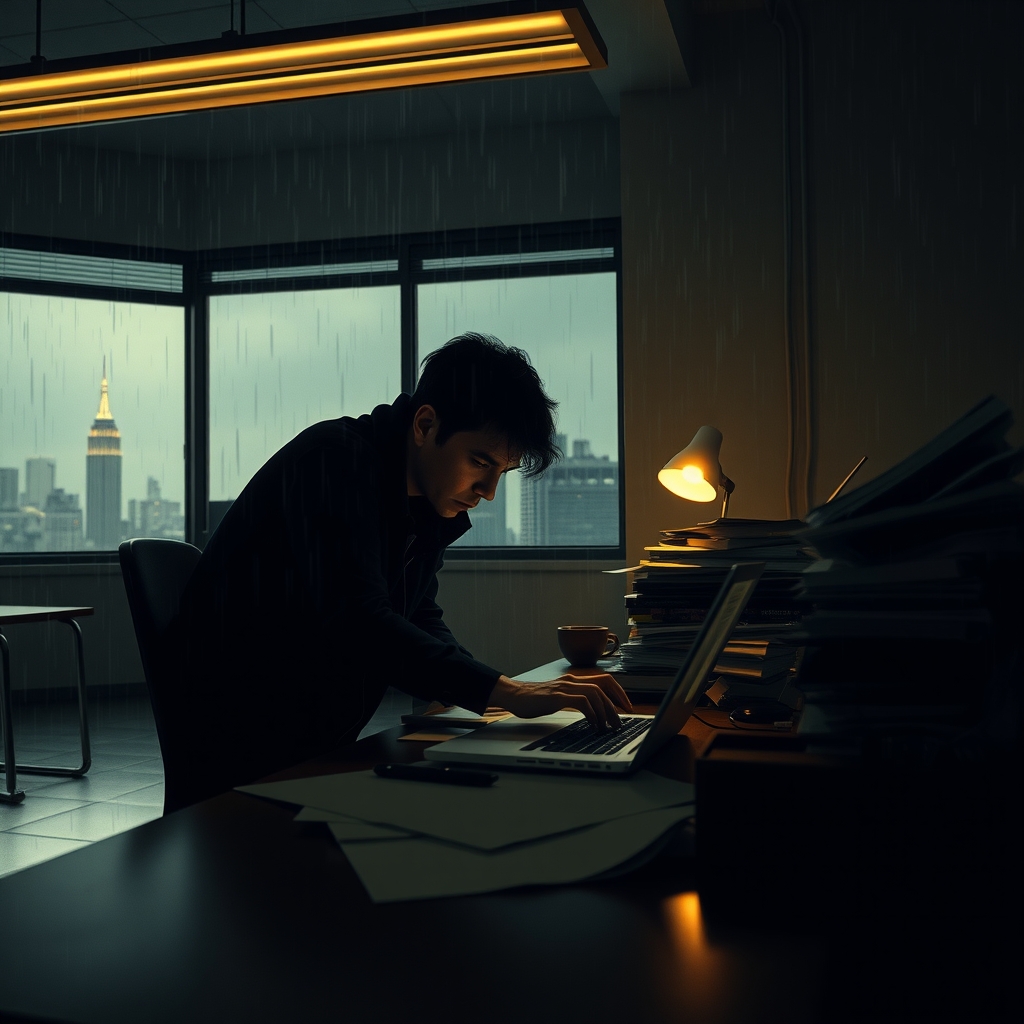
I remember the night when the clock read three a.m. and my hands trembled not from cold but from the weight of unfinished reports, unanswered emails, and a heart that refused to quiet its racing thoughts. Sleep had become a luxury, a brief exile that I postponed in favor of one more deadline, one more presentation, one more validation that felt as fleeting as a sunrise behind a cloud. The silence of the empty office was louder than any applause, and the ache in my chest grew louder with each passing hour, a reminder that I was chasing a finish line that kept moving further away.
Then, on a rain‑spattered Thursday, I stared at the ceiling and heard the echo of my own breath, a sound that seemed to ask, “Is this the life I imagined for myself?” In that instant, the words of Maya Angelou rang clear: “We are more alike, my friends, than we are unalike.” The truth struck like a cold wind – the relentless pursuit had stripped away the layers of who I truly was. I realized that the applause I chased was not for my achievements but for the illusion of control, and that the silence I feared was actually the space where my authentic self could finally speak.
Society has long equated rest with laziness, painting the act of pausing as a betrayal of ambition. The cultural script tells us that every hour not spent hustling is an hour lost to progress, a betrayal of the relentless drive that fuels economies and personal aspirations alike. Yet this narrative ignores the biological truth that our bodies and minds are wired to cycle, to recover, to reset, and to thrive only when given the permission to breathe. When we deny that permission, we invite chronic stress, anxiety, and a hollow sense of achievement that crumbles under the weight of its own emptiness.
—— END ——